
CODEX 11.1
Please make your selection from the above CODEX menu options for Episode 11.1
KEY-TEXT A
taberna Euphorbī
Euphorbus ōlim servus Caeciliī erat. in culīnā vīllae coquus erat, et cēnās optimās parābat. amīcī Caeciliī cēnās Euphorbī semper laudābant.
diē ruīnae Pompēiōrum mōns Vesuvius ārdēbat. cinis dē caelō cadēbat, et cīvēs per viās urbis currēbant. Caecilius Euphorbum vocāvit et magnā vōce clāmāvit: "nōn iam servus es! līber es!" Caecilius tabulam nōn scrīpsit, et nūllī testēs aderant. sed Euphorbus līber erat.
Euphorbus ad mare cucurrit. Caecilius tamen nōn cucurrit. numquam ā vīllā suā longē īverat. cūr nōn fūgit? nēmō scit. fortasse nōn potuit. fortasse nōluit.
Tiberius, fīlius Caeciliī, Euphorbum in lītore invēnit. duōs diēs sine aquā ibi manēbant. tandem nāvis advēnit, et Tiberius et Euphorbus ad Aegyptum iērunt.
Euphorbus numquam in Aegyptō fuerat. in Alexandrīā nūllam pecūniam et nūllōs amīcōs habēbat. sed coquere poterat. prīmum cēnās in domibus mercātōrum parābat. deinde in tabernā mercātōris Graecī labōrābat. hominēs ad tabernam veniēbant, quod cēnās Euphorbī amābant. Euphorbus pecūniam servābat.
post paucōs mēnsēs Euphorbus tabernam suam ēmit, prope portum Alexandrīae. nunc taberna Euphorbī parva est, sed semper plēna. Rōmānī, Graecī, Aegyptiī ibi cēnant et bibunt et rīdent. hospitēs Euphorbum saepe rogant: "unde vēnistī?" sed Euphorbus dē Pompēiīs dīcere nōn vult. rīdet et vīnum fundit.
Visual Walkthrough
KEY-TEXT B
epistula ex Alexandrīā
"Marcō Maecēnātī:
Aemiliānum, quem quaeris, nōndum invēnimus. per tōtam urbem īvimus. in portū, in forō, in viīs Graecōrum et in viīs Aegyptiōrum quaesīvimus. tū nōbīs dīxerās: 'vultum Sextī Aemiliānī habet.' herī ūnus ex tīrōnibus nostrīs virum prope portum vīdit, quī vultum Sextī habēbat. tīrō post virum cucurrit, sed in turbā virum mox vidēre nōn potuit. nēmō domum Aemiliānī invēnit.
Alexandrīa nōn est oppidum parvum sīcut Pompēiī. urbs ingēns est, et multī populī hīc habitant: Graecī, Aegyptiī, Iūdaeī, Rōmānī. quis Rōmānus est, quis Graecus? saepe scīre nōn possumus. in tantā turbā Aemiliānus facile latēre potest. tū nōbīs multōs tīrōnēs mīsistī, sed paucī linguam Graecam sciunt.
praetōrium nostrum tūtum est. custōdēs nostrī praetōrium cotīdiē servant, et nēmō praetōrium invenīre potuit. Potentēs Alexandrīae multōs annōs hīc labōrāvērunt, multō ante Potentēs Britanniae. nōs nōn sumus novī in Alexandrīā.
ad Ītaliam redīre nōlumus. hīc manēre et quaerere volumus. sī Aemiliānus in urbe manet, eum tandem capere possumus.
valē."
Visual Walkthrough
Informational Text A
Alexandrīa
Alexander Magnus, rēx Macedonum, multās terrās vīcit. annō 423 AUC (331 BCE) in Aegyptum vēnit et in lītore urbem novam condidit. urbī nōmen suum dedit: Alexandrīam.
post mortem Alexandrī Ptolemaeus, ūnus ex ducibus Alexandrī, rēx Aegyptī fuit. Ptolemaeus erat Graecus, et multī rēgēs ex familiā Ptolemaeī Aegyptum diū rēxērunt. annō 724 AUC (30 BCE) Rōmānī Aegyptum cēpērunt.
ante urbem in marī erat īnsula parva, Pharus. Ptolemaeī pontem longum ex saxīs aedificāvērunt, et pōns īnsulam ad terram iungēbat. pōns ferē mīlle passūs longus erat, et mare in duōs portūs dīvīdēbat. nāvēs ex tōtō orbe terrārum in portūs Alexandrīae veniēbant.
in īnsulā Ptolemaeī turrem altissimam aedificāvērunt. Graecī turrem quoque Pharum vocābant. nocte in summā turre ignis ārdēbat, et nautae lūmen Pharī procul in marī vidēbant.
viae Alexandrīae rēctae erant. via lātissima ā portā Sōlis ad portam Lūnae per mediam urbem ībat. multae aliae viae, quae quoque rēctae erant, ad viam magnam veniēbant. prope portum magnum erat rēgia, ubi rēgēs habitāverant. posteā ibi praefectus Aegyptī habitābat, quem imperātor Rōmānus mittēbat. prope rēgiam erat bibliothēca Alexandrīae, maxima omnium. sed dē bibliothēcā alia fābula est.
in Alexandrīā trēs populī habitābant. Graecī dīcēbant: "urbs nostra est, quod Alexander eam condidit." Aegyptiī dīcēbant: "terra nostra est, quod hīc multō ante Alexandrum habitābāmus." Iūdaeī quoque in magnā parte urbis habitābant, et lēgēs suās servābant. Rōmānī omnibus imperābant. Graecī tamen plūra iūra habēbant quam Aegyptiī aut Iūdaeī, quod Rōmānī ita volēbant. inter populōs saepe erant contrōversiae, et interdum pugnae in viīs.
GRAMMATICA
The genitive case
Operative, Latin has one more case for you to learn, the genitive. It is the fifth case you have met, after the nominative, the accusative, the dative, and the ablative. The genitive links one noun to another noun. English usually translates it with the word "of" or with 's.
The title of KEY-TEXT A is in the genitive:
- taberna Euphorbī ("the taberna of Euphorbus, Euphorbus's taberna")
- servus Caeciliī ("the slave of Caecilius, Caecilius's slave")
- lūmen Pharī ("the light of the Pharos")
In this episode's texts, the genitive usually comes right after the noun it belongs to.
The genitive does not always show an owner. rēx Macedonum means "the king of the Macedonians," and lūmen Pharī means "the light of the Pharos." In both, the English word "of" carries the meaning.
The genitive endings
Each declension has its own genitive endings:
| Nominative singular | Genitive singular | Genitive plural | |
| First declension | vīlla | vīllae | vīllārum |
| Second declension | servus | servī | servōrum |
| Third declension | mercātor | mercātōris | mercātōrum |
You can find all six endings in this episode's texts. In KEY-TEXT A, Euphorbus once cooked in culīnā vīllae, "in the kitchen of the villa." In Alexandria he cooked in domibus mercātōrum, "in the houses of merchants." Then he worked in tabernā mercātōris Graecī, "in the taberna of a Greek merchant." In KEY-TEXT B, the writer searched in viīs Graecōrum, "in the streets of the Greeks." In Alexandrīa, ships came ex tōtō orbe terrārum, "from the whole circle of the lands," which means "from the whole world."
Some third-declension words add an i before the genitive plural ending. The library of Alexandria was maxima omnium, "the greatest of all."
There is one warning about the genitive. In the first and second declensions, the genitive singular looks exactly like the nominative plural. KEY-TEXT A says amīcī Caeciliī cēnās Euphorbī semper laudābant. Both amīcī and Caeciliī end in -ī. The verb laudābant is plural, so its subject is the plural amīcī, "the friends." Caeciliī is the genitive: "the friends of Caecilius always praised Euphorbus's dinners." The ending -ae works the same way in viae Alexandrīae rēctae erant, "the streets of Alexandria were straight."
(In 11.2 you will see why a dictionary lists the genitive second, right after the nominative.)
VERBA
| Latin | English | Part of Speech |
| igitur | therefore, then | conjunction |
| ingēns | huge, enormous | adjective |
| longus | long, far | adjective |
| sōl | sun | noun |
| unda | wave, water | noun |
CULTURALIA
The layout of Alexandria
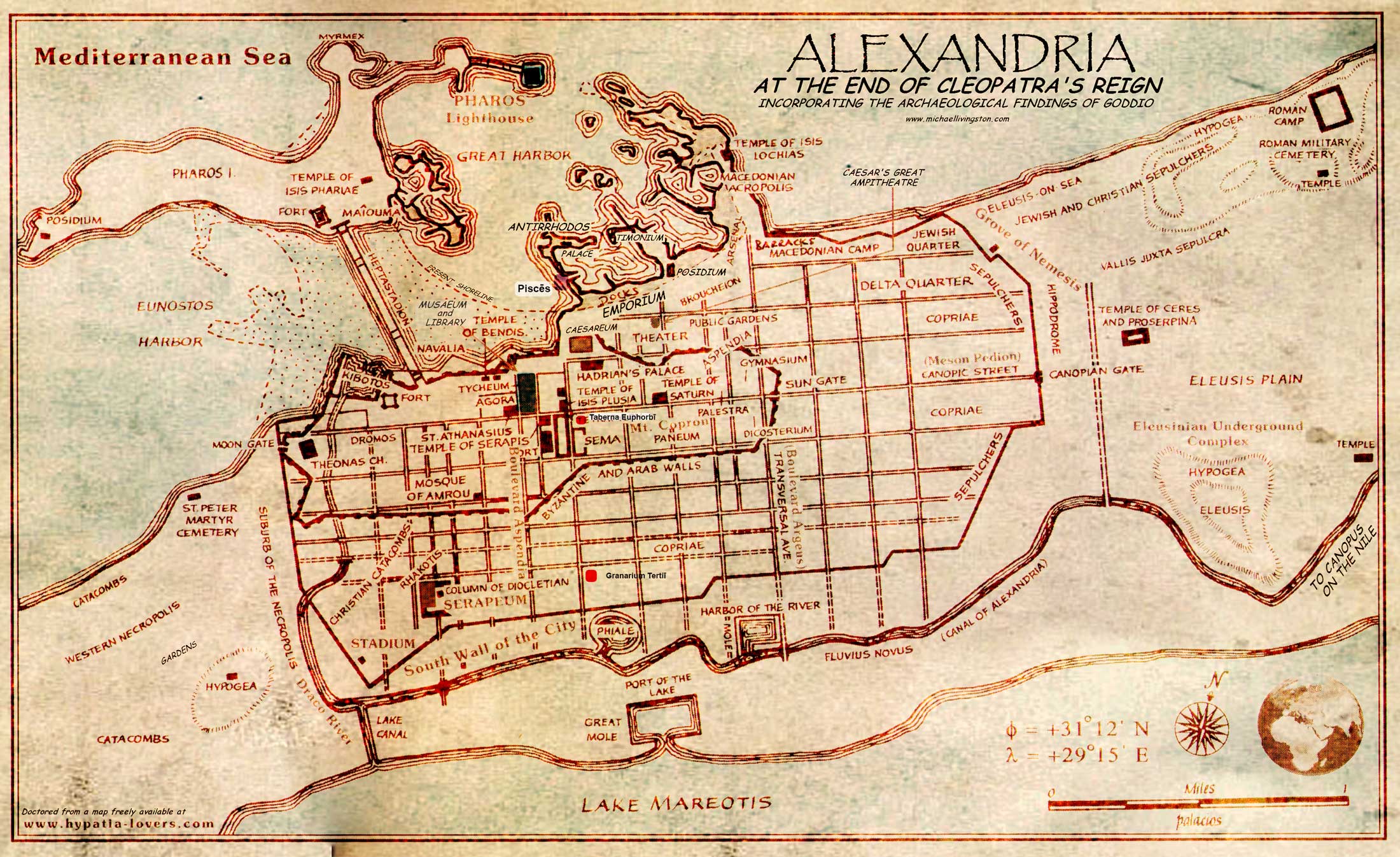
Operative, Alexandria was divided into five quarters. Each quarter took its name from one of the first five letters of the Greek alphabet: Alpha, Beta, Gamma, Delta, and Epsilon. The oldest part of the city was Rhakotis, the Egyptian quarter in the west. An Egyptian village had stood there before Alexander came, and the great temple of the god Serapis stood on its hill. Most of the city's Jews lived in the quarter called Delta, in the east.
The main street was the Canopic Way. It ran from east to west, from the Gate of the Sun to the Gate of the Moon. It was about thirty meters wide, and colonnades lined both sides. The other streets crossed it at right angles.
Alexandria had harbors on two sides. On the sea side lay the Great Harbor and a western harbor called Eunostos, "Good Return." To the south lay Lake Mareotis, and boats came down a canal from the Nile into the lake with grain and other goods. Strabo, a Greek geographer who visited the city, wrote that the lake harbor was richer than the harbors on the sea.
KEY-TEXT A says that Euphorbus bought his taberna prope portum Alexandrīae, near the harbor. The TSTT's map marks two places for this mission: Piscēs, beside the Great Harbor, and Taberna Euphorbī.
Three peoples under Roman rule
Roman law did not treat Greeks, Egyptians, and Jews the same way. In KEY-TEXT A, Euphorbus serves Romans, Greeks, and Egyptians in his taberna. Outside its door, each of those peoples lived under different rules.
The Greek citizens of Alexandria paid no head tax, the yearly tax that Rome charged each person. Their sons trained in the gymnasium, and a place in the gymnasium showed that a family belonged among the citizens.
Egyptians paid the head tax in full. Their old temples still stood, and their priests still served the gods. Roman officials, however, kept watch over the temples and the priests.
The Jews of Alexandria had their own council of elders and their own synagogues. They spoke Greek, and their holy books had been translated from Hebrew into Greek in Alexandria centuries earlier. They were not citizens of the city, and many of them wanted the same rights as the Greek citizens. The Greek citizens opposed this, and the quarrel sometimes turned into fighting in the streets.
In 41 CE the emperor Claudius wrote a letter to the city. He told the Greeks to let the Jews keep their own customs in peace. He told the Jews not to ask for more than they already had.
In 70 CE Titus, the son of the emperor Vespasian, destroyed the Temple in Jerusalem. Vespasian then made every Jew in the empire pay a yearly tax to the temple of Jupiter in Rome. By 80 CE, the year of this mission, Titus was emperor, and the Jews of Alexandria were still paying that tax.
The informational text Alexandrīa says that the Greeks had more rights than the Egyptians or the Jews quod Rōmānī ita volēbant, because the Romans wanted it that way. Why might it help Rome to keep the three peoples unequal?
ATTUNEMENT
Attunement, Episode 11.1
Preview each exercise, then copy it into your own Google Drive to complete it.
11.1.a - Whose Is It?
forced choice · 8 items11.1.b - Two Sentences, One Owner
sentence combining · 8 pairs11.1.c - Routes Through Alexandria
route plan · 3 routes11.1.d - True or False: Euphorbus's Story
true or false · 8 statements11.1.e - Reading the Letter from Alexandria
tiered reading · 4 tiers11.1.f - Three Peoples, One City
fact sort · 3 columnsMemorātiō
reflect · recall your pathTell this episode in your own words in your memorātiō, and check your account against these questions:
- Where in Alexandria did you find yourselves when you arrived?
- What stood on the small island in the harbor, and what joined the island to the land?
- Where did you go next, and who was pouring wine there?
- Whose cook had he been when you first met him?
- Who else stood near you, and whose twin was he?
- What did he whisper to you? Write his words exactly.
