
CODEX 4.2
Please make your selection from the above CODEX menu options for Episode 4.2
KEY-TEXT A
Maecēnātis scrīptōrēs
Augustus et Gāius Maecēnās in trīclīniō cēnam edēbant. cēna erat optima: piscēs, ōva, pānis, vīnum. servī bonī vīnum in pōcula fundēbant.
Maecēnās Augustō dīxit, "haec cēna est optima. grātiās agō tibi et tuō coquō. herī dē tuō imperiō et dē rē pūblicā putābam. tū dēbēs convocāre omnēs bonōs poētās Rōmānōs. hī poētae optima carmina scrībunt, et necesse est tibi bonam fāmam habēre. populus Rōmānus dēbet dē glōriā tuā audīre. poētae glōriam tuam servāre possunt, quod carmina saecula manent."
Augustus respondit, "ita vērō. sed quem dēbeō vocāre? quis optima carmina scrībit?"
Maecēnās dīxit, "dēbēs convocāre Publium Vergilium, Titum Līvium, et Quīntum Horātium. hī scrīptōrēs sunt optimī! omnēs bene nōvī, quod amīcī meī sunt.
Vergilius magnum carmen dē Trōiā et dē Aenēā scrībit. Aenēās erat vir Trōiānus, pater Rōmānōrum. hoc carmen nōmen tuum et nōmen Rōmae in memoriā omnium hominum servābit.
Līvius historiam Rōmae narrat, ab urbe conditā usque ad nostram aetātem. populus Rōmānus glōriam maiōrum in librīs Līviī legere potest.
Horātius optima carmina brevia scrībit. verba eius sunt clāra et pulchra. nēmō melius carmina Latīna canit."
Augustus rīsit et dīxit, "amīcī tuī sunt clārī, et tū es amīcus optimus. convocābimus omnēs. glōria Rōmae glōria mea erit."
Visual Walkthrough
KEY-TEXT B
Bellum Trōiānum I
Menelāus frātrem suum vīsitāvit. suus frāter erat rēx Agamemnōn. Agamemnōn Mycēnīs habitābat. Agamemnōn Mycēnās regēbat. Agamemnōn erat īrātus quod Menelāus omnia dē Paride nārrābat.
 rēx Agamemnōn omnēs hērōas in Graeciā vocāvit. multī hērōes Mycēnam in nāvibus magnīs advēnērunt.
Ulixēs adfuit. nōmen Ulixī in linguā Graecā est Odysseus. Ulixēs Ithacam regēbat. Ulixēs īnfantem fīlium, Tēlemachum, habuit. uxor Ulixis erat Pēnelopa.
Diomēdēs adfuit. Diomēdēs erat iuvenissimus rēx Graecus.
Āiāx adfuit. Āiāx erat fortissimus altissimusque Graecus.
Idomeneus adfuit. Idomeneus in Crētā habitābat et mīlitēs multōs habuit.
Nestor adfuit. Nestor erat rēx veterrimus et Pylum regēbat.
Menelāus erat laetus quod omnēs hērōes prō glōriā pugnāre dēsīderābant.
Agamemnōn magnum exercitum parābat et mox tempus erat ad urbem Trōiam nāvigāre. Agamemnōn autem in silvā ambulābat et cervam sacram cōnspēxit. cervam interfēcit et statim dea Diāna erat īrātissima! cerva erat sacra Diānae! Diāna ventōs omnēs cēpit atque nāvēs Graecōrum ad urbem Trōiam nāvigāre nōn poterant.

Agamemnōn ōrāculum vīsitāvit. ōrāculum Agamemnōnī dīxit: "dea Diāna est īrāta quod tū cervam suam interfēcistī. necesse est tibi sacrificāre fīliam tuam, Īphigenīam!"
Agamemnōn erat trīstis quod nōn dēsīderābat fīliam suam sacrificāre. Menelāus ad Agamemnōnem ambulāvit et Agamemnōnī persuāsit. Agamemnōn reluctanter fīliam suam, Īphigenīam, sacrificāvit sed nunc Agamemnōn erat trīstissimus. Graecī autem potuērunt ad urbem Trōiam nāvigāre et Menelāus erat laetus quod nunc Helenam invenīre poterat. Graecī ad Trōiam celeriter nāvigāvērunt.
Graecī mīlitēs contrā Trōiānōs mīlitēs fortiter pugnāvērunt sed Trōiānī urbem suam dēfendēbant. decem annōs Graecī urbem oppugnābant et decem annōs Trōiānī urbem dēfendēbant.
Graecī mīlitēs prope urbem sedēbant sed urbem capere nōn poterant.
 Agamemnōn erat īrātus et mox contrā Achillem pugnābat. Achillēs tunc in bellō pugnāre nōn dēsīderābat quod Agamemnōn puellam Achillis cēpit. Achillēs erat īrātissimus et in bellō pugnāre nōluit.
sine Achille, Graecī Trōiānōs vincere nōn poterant.
hērōs Trōiānus, Hector, quī erat fīlius Priāmī, mīlitēs Trōiānōs in proeliō dūcēbat. Hector erat fortissimus Trōiānōrum et multōs Graecōs interfēcit.
Hector reppulit mīlitēs Graecōs ad nāvēs prope lītora. Hector nunc erat cōnfīdēns. Agamemnōn et aliī Graecī hērōes erant territī et ōrābant Achillem ad pugnam redīre. Achillēs tamen ad pugnam redīre nōluit.

Patroclus, amīcus Achillis, Trōiānōs timēbat et dē Graecīs dēspērābat. mīlitēs Trōiānī iam nāvēs Graecās incendēbant.
Patroclus Achillem vocāvit et dīxit: "Achillēs, dēbēs īram tuam dēpōnere. necesse est tibi Graecōs adiuvāre! Hector multōs amīcōs interfēcit!"
Achillēs respondit: "minimē. cūr ego dēbeō Agamemnōnem adiuvāre? Agamemnōn est saccus vīnī! tū tamen dēbēs Graecōs adiuvāre. dēfende nāvēs sed nōlī oppugnāre Hectorem et nōlī oppugnāre urbem. cape arma mea quod arma mea sunt optima."
atque Patroclus arma Achillis gerēbat et mīlitēs in proelium dūcēbat. omnēs Graecī gaudēbant quod putābant Patroclum Achillem esse. omnēs Trōiānī timēbant quod putābant Patroclum Achillem esse.
Trōiānī celeriter ad urbem fugiēbant et nunc omnēs Graecī erant tūtī. Patroclus tamen voluit Hectorem interficere et celeriter ad Hectorem cucurrit.
Hector autem parātus erat. Hector sē vertit et hastam ad Patroclum iēcit. hasta Hectoris Patroclum trānsfīxit et Patroclus ad terram cecidit. Patroclus erat mortuus.
Achillēs nunc erat īrātissimus quod Hector amīcum suum interfēcit.
Achillēs voluit Hectorem interficere.

KEY-TEXT C
Bellum Trōiānum II
postquam Patroclum interfēcit, Hector arma Achillis ā corpore cēpit. Hector nunc habuit arma optima et nunc erat hērōs optimus in bellō.
necesse erat Achillī nova arma invenīre atque Achillēs suam mātrem, Thetidem, vocāvit.
Thetis voluit suum fīlium adiuvāre et ad Vulcānum iter fēcit. Vulcānus erat faber maximus.
Thetis dīxit: "Vulcāne, meus fīlius, Achillēs, nova arma requīrit. potesne nova arma facere? adiuvā Achillem!"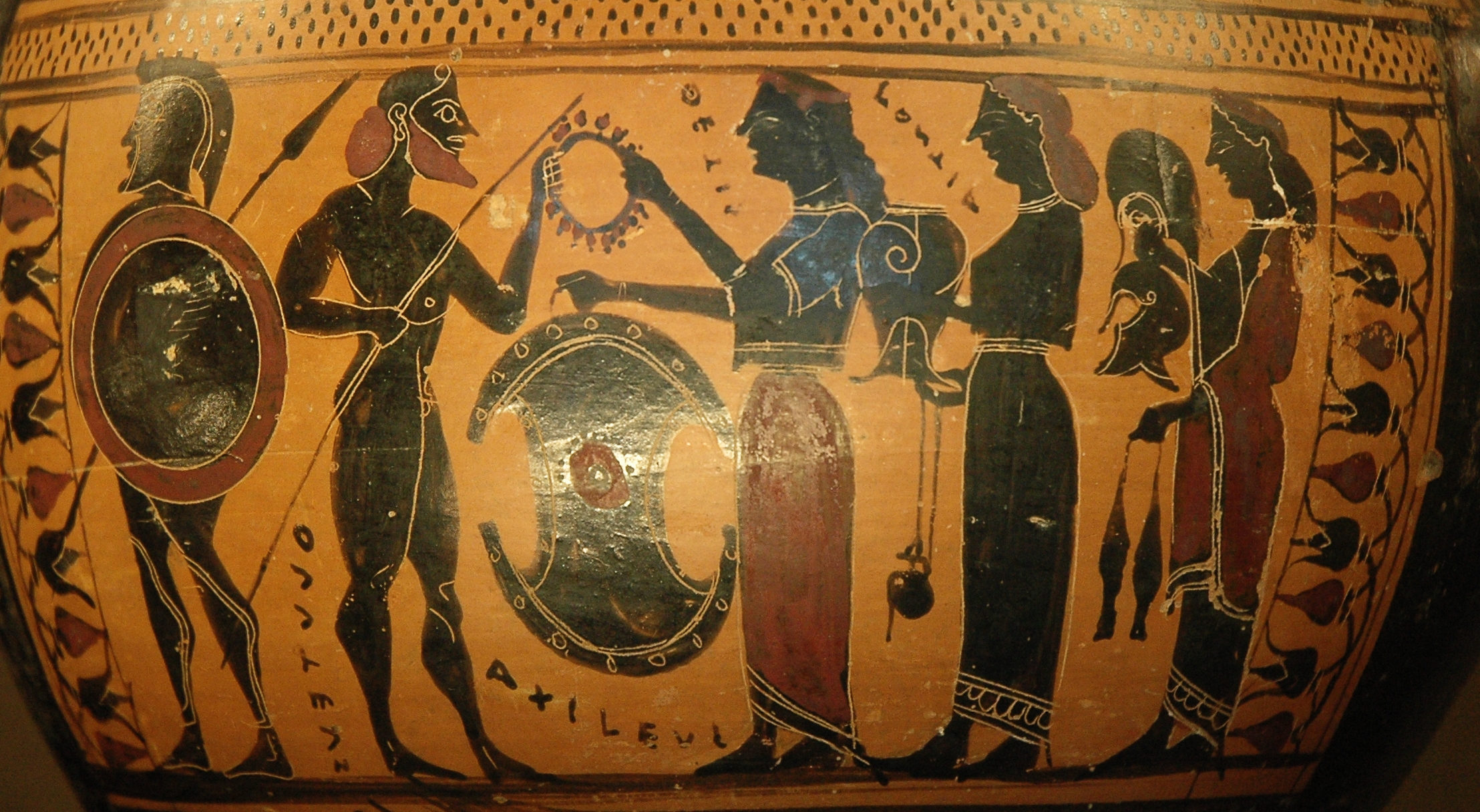
Vulcānus respondit: "ita vērō, Thetis, possum nova arma facere." Vulcānus statim malleum suum cēpit et incēpit nova arma facere. deus clipeum novum fēcit et nunc Achillēs arma optima habuit. hic clipeus erat gravissimus clipeus in tōtō mundō. modo Achillēs hunc clipeum tollere poterat. Achillēs erat nunc parātus ad bellum revenīre.
Trōiānī, ubi Achillem vīdērunt, erant territī. Achillēs statim multōs Trōiānōs interfēcit et Hectorem petīvit. Achillēs et flūmen strangulāvit! Hector, ubi Achillem vīdit, sē vertit et ad urbem fūgit. omnēs Trōiānī quoque in urbem fūgērunt. Hector autem sē vertit iterum et contrā Achillem pugnāvit.
rēx Priamus, in mūrīs Trōiae, ad Hectorem exclāmāvit: "Hector, nōn dēbēs contrā Achillem pugnāre. nōn potes eum superāre!" māter Hectoris, Hecubē, quoque ad fīlium suum exclāmāvit sed Hector nōn audīvit. Hector, sōlus, sine sodālibus, Achillem exspectābat.
Achillēs ad Hectorem celeriter currit sed Hector subitō Achillem timēbat. Hector temptāvit ab Achille fugere sed Trōiānī iam portās urbis clausērant. Hector extrā mūrōs urbis manēbat.
Hector ter circum mūrōs cucurrit sed tandem contrā Achillem pugnāvit. Achillēs nunc erat īrātissimus quod Hector fugere temptāvit.
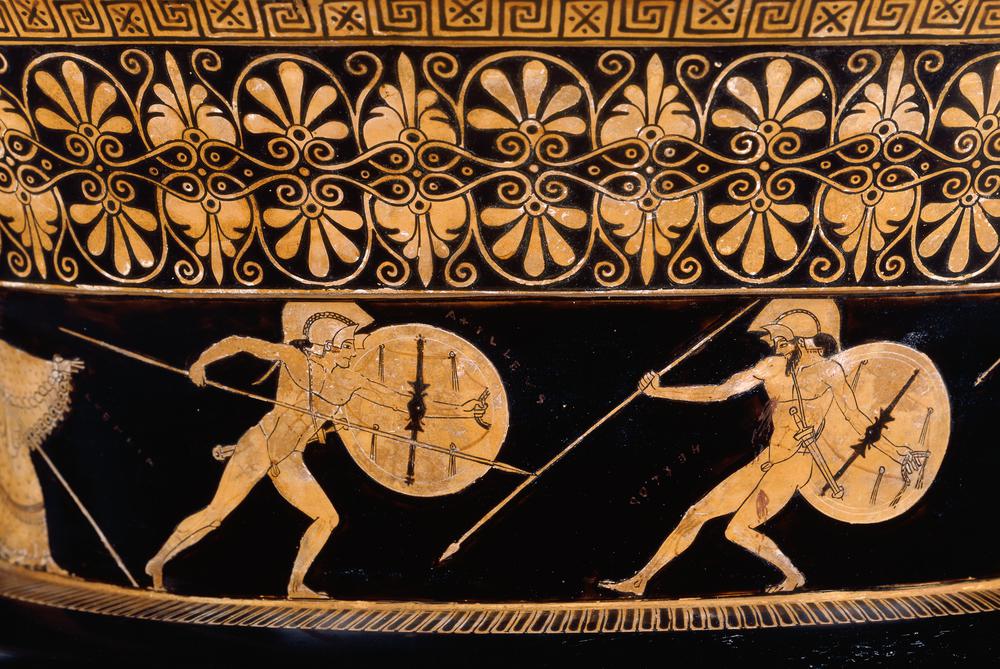
Achillēs Hectorem īnsultāvit et hastam suam iēcit. Hector hastam ēvītāvit et tunc ad Achillem hastam suam iēcit. ecce! hasta Hectoris in clipeō Achillis haesit.
eheu! Hector autem Achillem nōn vulnerāvit.
Achillēs hastam dētrāxit et fortiter hastam per caelum ad Hectorem iēcit. hasta sonum magnum fēcit et Hectorem trānsfīxit. Hector ad terram cecidit. Hector erat mortuus et omnēs Trōiānī in mūrīs lacrimābant.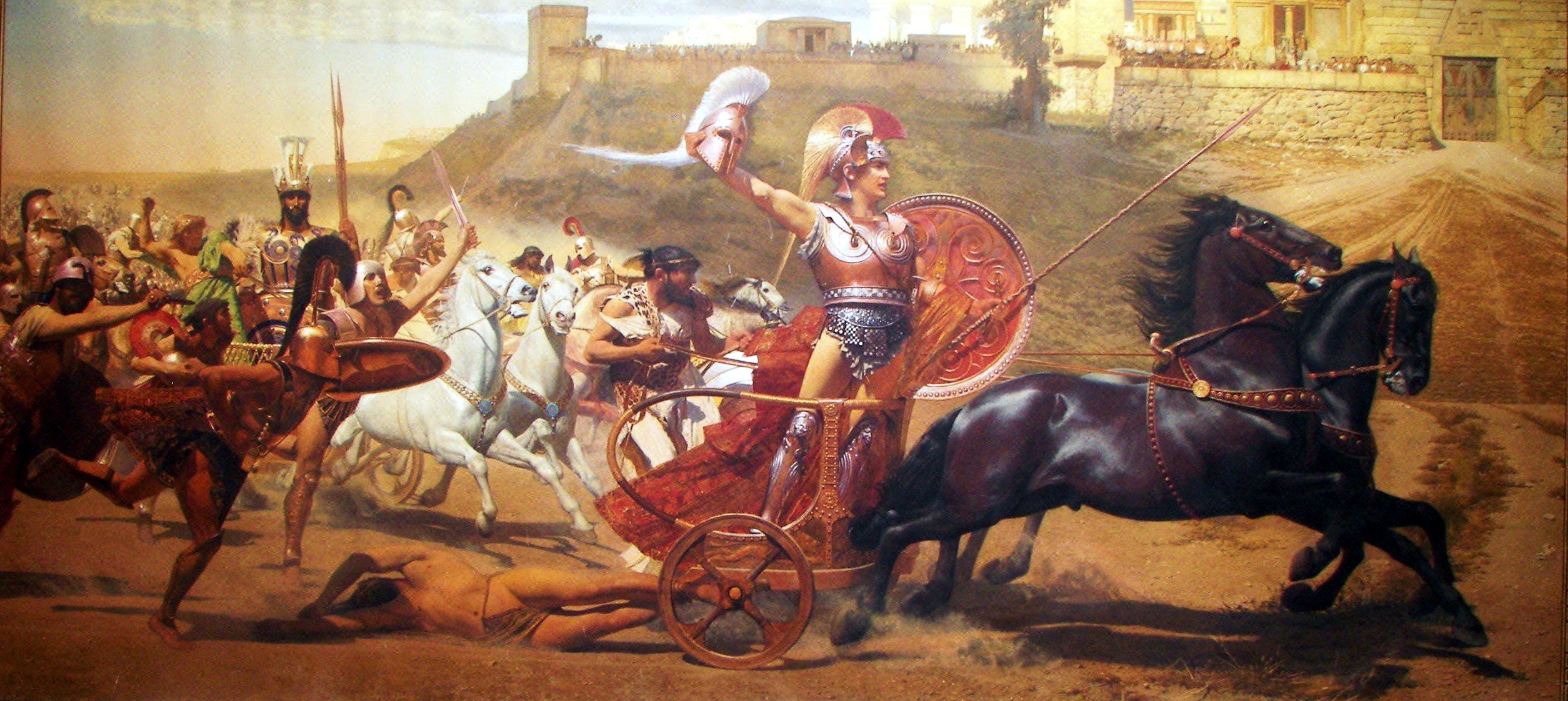
Achillēs autem adhūc erat īrātus. Achillēs corpus Hectoris cēpit et corpus ad currum ligāvit. ille hērōs tunc currum agēbat et corpus ter circum mūrōs Trōiae trāxit. Hecubē, māter Hectoris, in dolōre exclāmāvit: "Achillēs, dā nōbīs corpus Hectoris! necesse est nōbīs fīlium nostrum in terrā pōnere!"
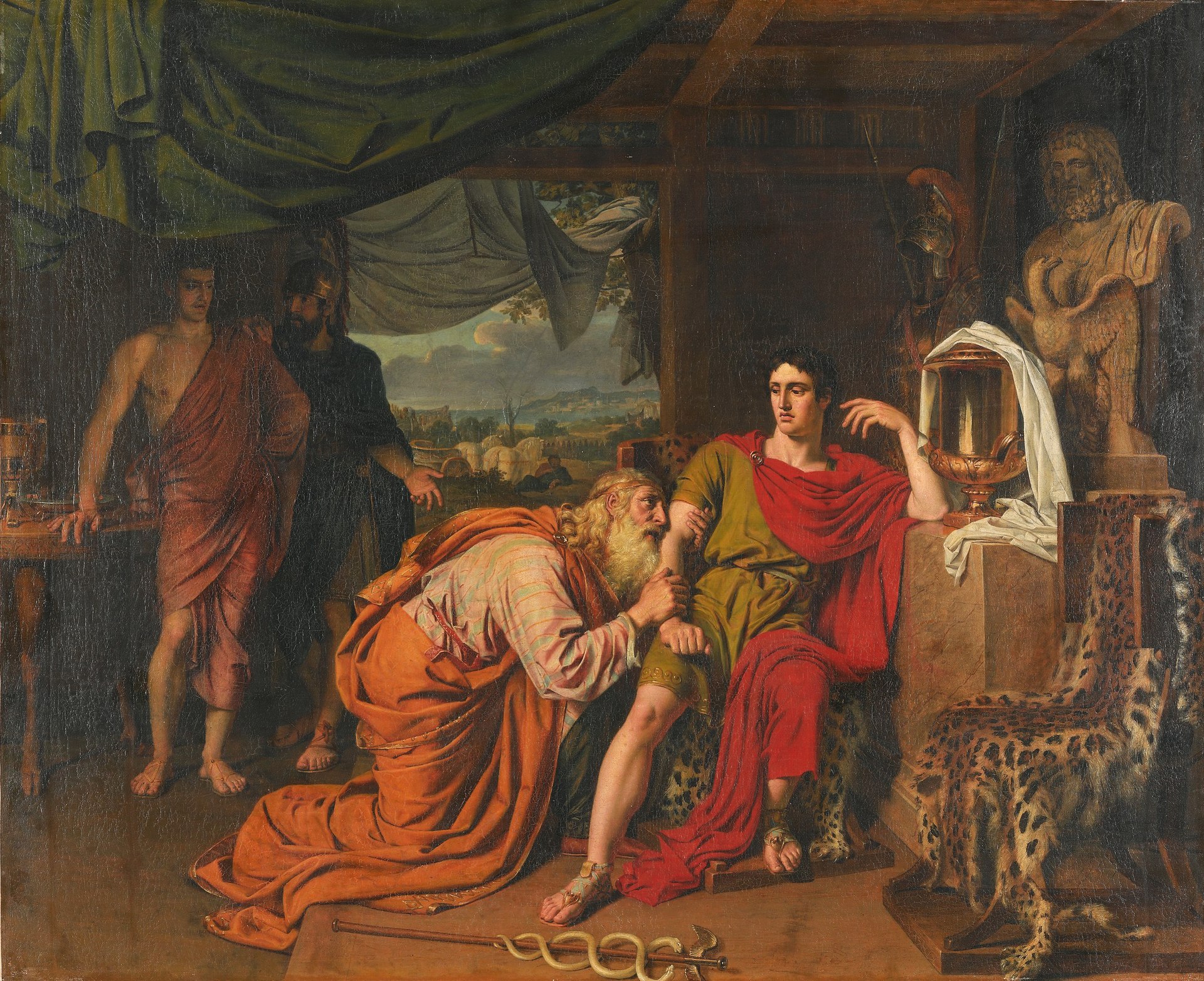 Achillēs tamen illam fēminam nōn audīvit; ad nāvēs cum corpore Hectoris revēnit. ūnā nocte, rēx Priamus per castra Graeca clam ambulābat et tentōrium Achillis intrāvit. salūtāvit Achillem et statim ad terram cecidit. Priamus tunc Achillem supplicāvit hīs verbīs: "ō Achillēs, nunc nōn sum tuus inimīcus. sum pater et ego dēsīderō corpus fīliī quod necesse est Hectorem in terrā pōnere. putā dē patre tuō. remitte corpus mihi. sine mē Hectorem in terrā pōnere. sine mē sacrificia facere. sine mē Hectorem Charontī dāre. dēsiste ab īrā, tē ōrō."
Achillēs erat stupefactus. Achillēs dē patre suō putābat et ad Priamum spectābat. ille hērōs corpus Hectoris Priamō dedit et tunc Priamus ad urbem Trōiam revēnit. illā nocte, Priamus et Achillēs nōn iam erant inimīcī.
Informational Text A
Roman Patronage
in Rōmā duo erant genera ex cīvibus. alterum erat patricium, alterum erat plēbēium. servī nōn erant cīvēs, quod iūra in iūdiciō servōs dēfendit. patriciī saepe erant dīves et potentēs. patriciī erant sacerdōtēs, magistrātūs, et iūdicēs. plēbēs saepe pecūniam nōn multam habet. necesse est plebānīs saepe labōrāre. plēbēs erant agricolae et mercātōrēs et fabrī.
Rōmulus erat prīmus rēx Rōmānus. Rōmulus ‘patrōnātum’ et ‘clientēlam’ creāvit. patriciī nunc erant patrōnēs, quī plēbēiōs adiuvat. plēbēs erant clientēs. patrōnus clientem in iūdiciō dēfendere dēbet, quod clientēs iūra nōn intellegēbant. clientēs tamen suum patrōnum legere poterat. patrōnus bonus quoque negōtium prōvidēre, et clientēs ad cēnam invītāre dēbet.
cliēns cotīdiē ad vīllam patrōnī vīsitāvit. cliēns in ātriō exspectāvit, et patrōnum salūtāvit. haec erat ‘salūtātiō’. patrōnus tunc cibum aut pecūniam clientī dedit. Rōmānī dōnum ‘sportulā’ appellābant. clientēs per urbem cum suō patrōnō ambulābant et eum laudābant. clientēs prō suō patrōnō, quī praesertim honōrēs petēbat, labōrābant. multī clientēs suffrāgium movēre poterant.
servus, postquam dominus servum līberāvit, nunc erat cliēns. dominus nunc erat servī patrōnus. patrōnus clientēs ab prōvinciīs saepe habēbat. patrōnus multōs clientēs habēre poterat, sed ipse esse cliēns. imperātor Augustus erat patrōnus Maecēnātis. Maecēnās ipse erat patrōnus Vergiliī et Horātiī et Līviī.
Text originally written by Sean Minion
GRAMMATICA
Perfect stems can look very different from present stems
Operative, you have been reading verbs in the perfect tense for some time now. A verb's perfect stem sometimes looks very different from its present stem. Here are three examples:
- dūcit : dūxit (he leads : he led)
- discēdit : discessit (he departs : he departed)
- cadit : cēcidit (he falls : he fell)
The change follows patterns, but you cannot always predict it, so you learn each verb's principal parts. The third principal part gives you the perfect stem. When you meet a perfect form you do not recognize, do not assume it is a new verb. Check the principal parts, and you will usually find a verb you already know.
The accusative plural
You already know the accusative singular, the direct-object case. Like the nominative, the accusative has a plural. The table shows the singular and the plural side by side:
| Singular | Plural |
| dominus poētam salūtat. the master greets the poet. |
dominus poētās salūtat. the master greets the poets. |
| māter servum vocābat. the mother kept calling the slave. |
māter servōs vocābat. the mother kept calling the slaves. |
| Graecī mīlitem cēpērunt. the Greeks captured the soldier. |
Graecī mīlitēs cēpērunt. the Greeks captured the soldiers. |
Here are the three patterns:
- First declension: accusative singular -am becomes plural -ās.
- Second declension: accusative singular -um becomes plural -ōs.
- Third declension: accusative plural is -ēs, which looks exactly like the third-declension nominative plural. Context and word order tell you which is subject and which is object.
VERBA
| Latin | English | Part of Speech |
| ille | that (one) | pronoun |
| mittit | she/he sends | verb |
| novus | new | adjective |
| quaerit | she/he seeks, asks | verb |
| urbs | city | noun |
CULTURALIA
Operative, Caecilius is about to ask you about the great writers of Rome, and he has opinions about them. To answer him well you should know not only who these writers were but how Rome produced them. Roman literature came, in large part, from patronage.
How patronage worked
Roman society ran on obligations between a patrōnus (patron) and a cliēns (client). A patron, typically wealthy and well-connected, protected and supported his clients: he defended them in court, provided introductions and work, and gave a daily handout called the sportula. In return, clients attended their patron each morning in a ritual called the salūtātiō, walked with him through the city, praised him publicly, and supported his ambitions, including at the ballot box. It was not charity; it was a relationship of mutual duty, and it reached from freed slaves at the bottom to the emperor at the top. Even a powerful man was some greater man's client.
Patronage and literature
Poets were clients too. A writer needed a patron to give him the leisure and security to write, and in return his work brought the patron, and Rome, lasting fame. The greatest literary patron of the age was Gaius Maecenas, himself a client of the emperor Augustus. Maecenas gathered and supported the finest writers of his generation, and out of his circle came the literature that defined the Augustan Age. KEY-TEXT A shows this arrangement at its beginning. Maecenas persuades Augustus that an emperor needs poets, because carmina saecula manent, poems outlast the centuries, and a ruler's fame lasts only as long as the writing that records it.
The writers Caecilius will name
These writers appear throughout Roman literature and throughout the AP Latin syllabus, so you will meet them for years.
- Vergil (Pūblius Vergilius Marō, 70–19 BCE) wrote the Aeneid, the national epic of Rome, tracing the Trojan refugee Aeneas from the ruins of Troy to the founding of the Roman line. He also wrote the Eclogues and Georgics. Caecilius reads the Aeneid every year.
- Horace (Quīntus Horātius Flaccus, 65–8 BCE) wrote lyric poetry: the Odes, Satires, and Epistles. His poems are compressed, allusive, and difficult, which is why Caecilius admits he cannot always follow him.
- Livy (Titus Līvius, 59 BCE–17 CE) wrote Ab Urbe Conditā, a monumental history of Rome from its founding. KEY-TEXT A names him among Maecenas' summoned writers.
- Ovid (Pūblius Ovidius Nāsō, 43 BCE–17 CE) wrote the Metamorphoses. He was brilliant and playful, and Augustus eventually exiled him. That exile is behind Caecilius' judgment that Ovid was a fine writer with a foolish heart.
Cicero (Mārcus Tullius Cicerō, 106–43 BCE) was not part of Maecenas' circle, but he is the greatest figure of Roman prose and the greatest orator of the Republic. Caecilius questions his wisdom because Cicero set himself against the family of Caesar and was killed for it.
ATTUNEMENT
Attunement, Episode 4.2
Preview each exercise, then copy it into your own Google Drive to complete it.
4.2.a - Present Stem or Perfect Stem?
form · 6 items4.2.b - One or Many?
form · 5 items4.2.c - Why Fund Poets?
comprehension · KEY-TEXT A4.2.d - What the Text Says and Doesn't
comprehension · KEY-TEXT B4.2.e - Reading the Ransom
comprehension · KEY-TEXT C4.2.f - Patronage: Product, Practice, Perspective
intercultural · graphic organizer4.2.g - The Writers of Rome
research · 4 authorsMemorātiō
reflect · recall your pathYou sat at Caecilius' table and were asked what you know of Rome's great writers. Which of them did you speak for, and did you choose one who fits your Recentius's view of the world or one who cuts against it? Caecilius then gave you his own verdicts, and they were not gentle. What did he say about Vergil, about Cicero, about Ovid, about Horace?
Write down the four judgments. A man tells you what he is by what he cannot stand.
