
CODEX 3.1
Please make your selection from the above CODEX menu options for Episode 3.1
KEY-TEXT A
Epistula Caeciliī ad Salvium
Lūcius Caecilius Iūcundus Salviō suō salūtem dīcit.
sī valēs, bene est. ego valeō.
novās rēs Ītaliae tibi scrībō, et dē urbe Rōmā. Vespasiānus imperātor mortuus est. nunc fīlius eius, Titus, Rōmam regit. Rōmānī novum imperātōrem salūtāvērunt, et pāx manet. mūtātiō sine bellō erat, et hoc bonum est.
tū mē bene scīs, Salvī: argentārius sum, et pecūniam cūrō. pāx argentāriō bona est. ubi pāx est, mercātōrēs negōtium faciunt, nāvēs in portum veniunt, et pecūnia fluit. ubi autem bellum est, negōtium perit. itaque novum imperātōrem laudō, dum pācem servat.
Rōmae novum amphitheātrum surgit, Flāviānum. amphitheātrum magnum et clārum est. Vespasiānus amphitheātrum aedificābat, et nunc Titus labōrem cōnficit. ibi turba magna sedet et clāmat. et hoc spērō: ōlim ipse Rōmam veniō, et amphitheātrum videō!
valē, mī Salvī.
Visual Walkthrough
KEY-TEXT B
Tier 2
Pandōra
postquam Promētheus ignem hominibus dedit, Juppiter valdē īrātus erat quod Promētheus dolum contrā eum fēcerat. itaque Juppiter cōnsilium cēpit.
Juppiter ad Vulcānum, fīlium suum, vēnit et dīxit: "Vulcāne, mī fīlī! necesse est fēminam pulchram ē terrā creāre. necesse est omnibus deīs dōna fēminae dare."
Vulcānus fēminam ē terrā creāvit, et omnēs deī deaeque dōna fēminae dedērunt.
Juppiter nōmen "Pandōra" fēminae dedit. Juppiter quoque arcam fēminae dedit. arca plēna malōrum rērum erat. tum Juppiter Pandōrae dīxit: "nōlī aperīre arcam!"
posteā Juppiter ad Epimētheum, frātrem Promētheī, vēnit. Juppiter dīxit: "ego fēminam pulchram habeō. tū cupīs fēminam pulchram habēre?"
Epimētheus respondit: "ita vērō! ego cupiō fēminam habēre." Juppiter rīsit et Pandōram vocāvit. Pandōra arcam in manū tenēbat. tum Pandōra ad Epimētheum ambulāvit.
Epimētheus laetus erat, sed Promētheus timēbat. Promētheus frātrem monuit, sed frustrā. Epimētheus fēminam amābat. Juppiter iterum rīsit.
Epimētheus saepe dē arcā rogābat. Pandōra nihil dē arcā dīcēbat. Epimētheus saepe rogābat: "quid est in arcā? aperī arcam!" Pandōra quoque cūriōsa erat et cupiēbat arcam aperīre.
tandem Pandōra arcam aperuit! subitō multa mala ex arcā exiērunt. Pandōra timēbat et statim arcam clausit. spēs sōla in arcā mānsit.
Promētheus trīstis erat quod hominēs nunc multa mala vidēbant. sed Promētheus spem hominibus dedit. Promētheus quoque alia dōna hominibus dedit: hominēs nunc in domibus vīvēbant, agrōs colēbant, dē medicīnā intellegēbant, nāvēs nāvigābant, et instrūmenta faciēbant.
Juppiter autem iterum erat īrātus.
Visual Walkthrough
Tier 1
Pandōra
Juppiter est īrātus. Juppiter cōnsilium capit.
Juppiter Vulcānum vocat. Vulcānus fēminam ē terrā facit. fēmina est pulchra. omnēs deī fēminae dōna dant. Juppiter fēminae nōmen dat: "Pandōra".
Juppiter Pandōrae arcam dat. in arcā sunt multa mala. Juppiter Pandōrae inquit: "nōlī arcam aperīre!"
Epimētheus est frāter Promētheī. Epimētheus Pandōram videt et amat.
Pandōra arcam spectat. Pandōra est cūriōsa. Pandōra arcam aperīre cupit.
tandem Pandōra arcam aperit! mala ex arcā exeunt. nunc hominēs multa mala habent. Pandōra timet et arcam claudit. spēs sōla in arcā manet.
Promētheus est trīstis. sed Promētheus spem hominibus dat. Juppiter iterum est īrātus.
Visual Walkthrough
Informational Text A
annus quattuor Imperātōrum
in annō 68, Senātus Populusque Rōmānus Imperātōrem Nerōnem nōn iam amābant. Nero multōs senātōrēs necāvit quod Gaius Calpurnius Pīso Nerōnem superāre temptāverat. Pīso Nerōnem superāre nōn poterat et Nero erat irātissimus. sed tamen Senātus Nerōnem ā imperiō depūlit in 9 Juniī annō 68. Nero statim sē necāvit.
postquam Nero sē necāvit, Galba imperium capiēbat. Galba erat prōconsul Hispāniae sed plūs potentiae voluit.
Galba erat timidus et, sicut Nero, multōs senātōrēs necāvit. Galba nōn erat bonus Imperātor et multī mīlitēs Vitelliō imperium dāre voluērunt. mīlitēs Rōmānī Vitellium amāvērunt. Vitellius erat imperātor nōtissimus sed prope Rōmam nōn erat. ergo Vitellius imperium nōn iam capere poterat.
Galba erat perterritus quod amīcus, Otho, quoque imperium voluit. mox Otho Galbam petīvit et mīlitēs Galbam in Forō necāvērunt.
senātōrēs Othōnem salūtāvērunt sed mox Vitellius Othōnem petīvit. Vitellius legionēs optimās habuit et Vitellius Othōnem facile vīcit. Otho statim sē necāvit. ille modo trēs mensēs regēbat.
senātōrēs Vitellium salūtāvērunt et Vitellius Rōmam regēbat.
Vespasiānus autem imperium cupiēbat et mox Vitellium petīvit. Vespasiānus erat imperātor nōtissimus quod in Britanniā Syriāque Judaeāque pugnāvit. mīlitēs Vespasiānum amāvērunt. Vespasiānus Vitellium facile vīcit et statim senātōrēs Vespasiānum salūtāvērunt. Vespasiānus nunc tōtum imperium habēbat. in illō annō quattuor Imperātōrēs Rōmam regēbant.
dehinc decem annōs Vespasiānus Rōmam regēbat. populus Rōmānus Vespasiānum amābat. antequam periit, Vespasiānus Flāviānum amphitheātrum aedificābat. amphitheātrum erat et nōtissimum et ingentissimum. fīlius Vespasiānī, Titus, amphitheātrum confēcit cum ā patre imperium cēpit.
Informational Text B
Vespasian and Titus
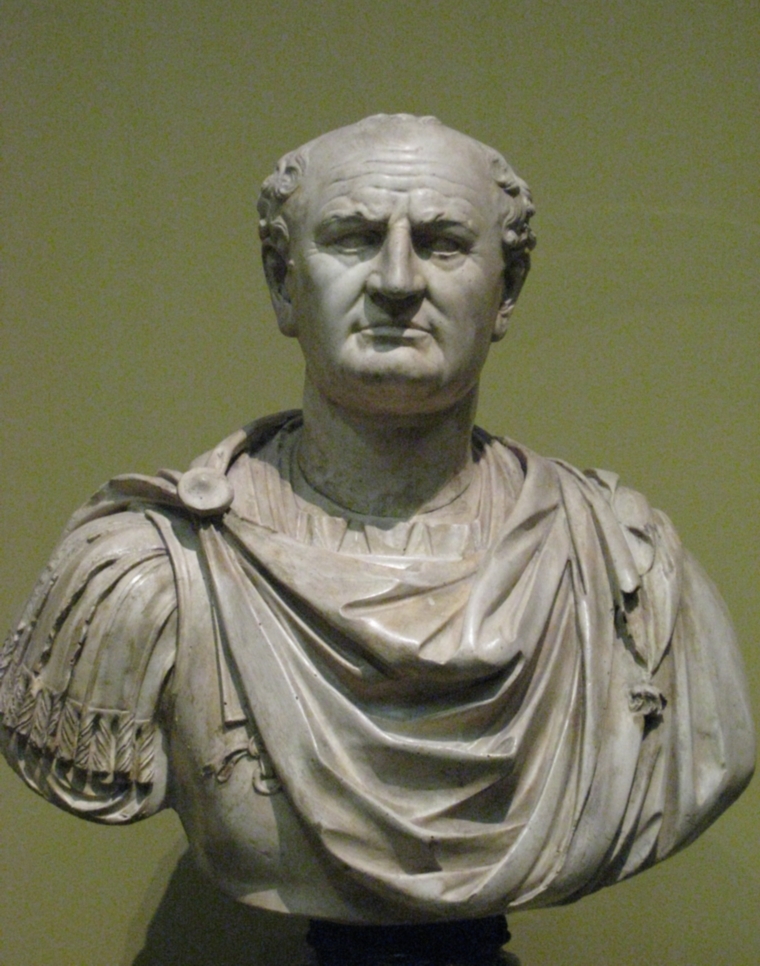
T. Vespasiānus Flāvus erat eques, quī in Judēā mīlitibus praeerat. illō annō, Nerō mortuus erat, trēs virī imperium cēpērunt. Galba prīmus imperium cēpit. Othō tunc imperium cēpit. Vitellius postrēmō imperium cēpit. hōrum rērum nūntius ad Vespasiānum advēnit, quī Hierosolyma obsīdēbat. Vespasiānus esse imperātor ipse volēbat.
Vespasiānus ab Judēā ad Ītaliam mīlitēs dūcere coepit. Titus, quī erat fīlius Vespasiānī, in Judea manēbat. mīlitēs in Syriā et in Aegyptō Vespasiānum Imperātōrem appellābant. mox senātus Rōmānus Vespasiānum Imperātōrem appellāvit. interim Titus Judeam vīcit et templum Hierosolymīs dēlēvit. arcus in Forō Rōmānō triumphum Titī hodiē ostendit.

Vespasiānus statim pecūniam collēgit. Imperātor novus tribūta in cīvibus imposuit. tribūta ab prōvinciīs collēgit. Titus gāzās ab Judea ferrēbat. Vespasiānus etiam in ūrīnam tribūta inposuit. Vespasiānus et Titus pecūniā collēcta Amphitheātrum prope forum Rōmānum aedicāvērunt, quod nōs hodiē Colossēum appellāmus. Rōmānī cīvēs in Amphitheātrō gladiātōrēs et vēnātiōnēs et etiam naumachiā grātuītā spectāvērunt.
Titus frātrem nōmine Domitiānum habuit. Domitiānus, postquam Vespasiānus et Titus erant mortuī, erat imperātor. senātus tamen Domitiānum laudāvit…
Text originally written by Sean Minion
GRAMMATICA
The plural verb ending -nt
Operative, in your immersions so far every verb has had a single person or thing as its subject. These are singular verbs. When more than one person or thing does the action, the verb must change to show it. These are plural verbs.
You already know the singular third-person verb ends in -t. The plural third-person verb ends in -nt. The verb groups you have met (1: ambulat, 2: rīdet, 3: contendit) are told apart by the vowel before the ending, and they still are in the plural, though the third group now shows -u- rather than -i-:
| Singular | Plural |
| ambulat | ambulant |
| rīdet | rīdent |
| contendit | contendunt |
Watch for new verbs ending in -nt: they are plural and have more than one subject.
The nominative plural
A plural verb needs a plural subject, so the nominative gains a new set of endings. You cannot pair a singular subject with a plural verb.
| Singular | Plural |
| puella rīdet. The girl laughs. |
puellae rīdent. The girls laugh. |
| servus ambulat. The slave walks. |
servī ambulant. The slaves walk. |
| mercātor contendit. The merchant hurries. |
mercātōrēs contendunt. The merchants hurry. |
So the first-declension nominative -a becomes -ae; the second-declension -us becomes -ī; the third-declension nominative plural is -ēs.
The plural of est (is) is sunt (they are).
For greater attunement, operatives should view this video briefing courtesy of latintutorial.com.
VERBA
| Latin | English | Part of Speech |
| dē | down from, about | preposition |
| facit | she/he makes, does | verb |
| hic, haec, hoc | this | pronoun |
| multī | many | adjective |
| vir | man, hero | noun |
CULTURALIA
Operative, the Rome of 79 CE that Caecilius writes about is an empire, but it had not always been one, and not everyone agreed it should be.
For centuries Rome was a rēs pūblica, a "public thing." Power was shared: the Senate advised, two annually elected consuls held executive command, and the people voted to choose them. No one man ruled. That older arrangement is the one Caecilius sketches for you in his tablīnum.
It did not last. A century of civil wars, Romans fighting Romans, tore the Republic apart. Out of that bloodshed came Augustus, who ended the wars and gave Rome the pāx Rōmāna, a long stretch of internal peace. In return, Rome accepted the rule of one man. Augustus was careful never to call himself "king," but an emperor is what he was, and every emperor since has descended from his settlement.
Romans disagreed about that bargain. To a man like Caecilius, a banker, it is obvious and good. Peace means trade, ships in the harbor, and money in motion, and a banker thrives on all three. He will praise any emperor who keeps the peace. Others remembered the Republic with longing. To them the loss of elections and shared power was a real loss, however prosperous the empire became. When Caecilius asks you quid scītis dē Rōmā?, he is also asking which side of that argument you stand on.
The two emperors of the moment are Flavians, and confusingly both are named Titus Flavius Vespasianus: the father we call Vespasian, the son we call Titus. Vespasian rose to power in 69 CE and ruled about ten years; when he died in 79, Titus succeeded him peacefully, the calm transfer Caecilius reports in his letter. Their most famous monument is the Flavian Amphitheatre, which Vespasian began and Titus completed, and which we know today as the Colosseum.
For deeper attunement on how the empire began, operatives may view these briefings, the first courtesy of the American Institute for Roman Culture and the second from TED-Ed:
ATTUNEMENT
Attunement, Episode 3.1
Preview each exercise, then copy it into your own Google Drive to complete it.
3.1.a - Make It Plural (Nouns)
form · 9 nouns3.1.b - Make It Plural (Sentences)
form · 5 sentences3.1.c - Caecilius's Letter
comprehension · 5 questions3.1.d - Year of the Four Emperors: Timeline
timeline · 6 rulers + 2 questions3.1.e - Pandora
comprehension · 6 questions3.1.f - CULTURALIA Comprehension
comprehension · 6 questionsMemorātiō
reflect · recall your pathYou are back in Caecilius's tablīnum, where he has just dictated a letter and given you a quick lesson on Rome's past. In your own words, set down what you took from this stop: whom he was writing to and why, his news about Rome's emperor, and the path he traced from the old Republic to the empire of his day. And why does peace matter so much to a man in his trade?
Caecilius is a banker, and bankers like quiet. You will meet Romans whose reasons run the other way, and his answer is the one you will measure theirs against.
